
Human-Centered Problem Solving: A Design Thinking Approach
Navigating the landscape of problem-solving demands a comprehensive methodology that goes beyond mere analytical skills. At its core, design thinking is a human-centered approach that places the end user at the heart of the problem-solving process. This blog explores the intricacies of human-centered problem-solving in design thinking, emphasizing the symbiotic relationship between empathetic understanding and critical thinking.
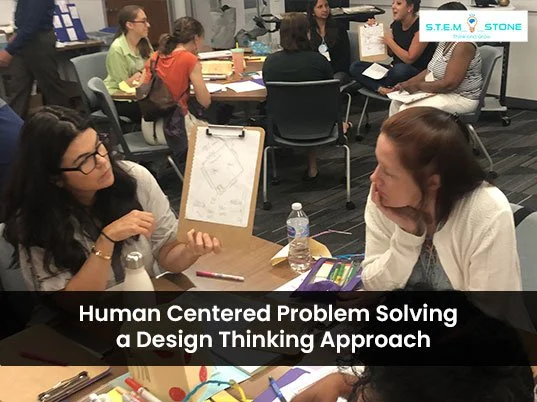
Understanding the Essence of Design Thinking
Design thinking is more than a mere process; it is a mindset that seeks to understand and address challenges from the user's perspective. At its essence, this approach involves a series of iterative steps: empathize, define, ideate, prototype, and test. Each step is guided by the overarching principle of putting the user's needs, desires, and experiences at the forefront.
Empathy as the Cornerstone
The first step, empathy, is the cornerstone of human-centered problem-solving. Design thinkers immerse themselves in the user's world, seeking to understand their motivations, frustrations, and aspirations. This empathetic connection is not just a checkbox in the process but a profound understanding that informs every subsequent decision.
Defining the Problem with Precision
Critical thinking plays a pivotal role in the "define" stage of design thinking. Here, the challenge is framed with precision, avoiding assumptions and biases. Design thinkers critically analyze the information gathered during the empathetic phase, distilling it into a well-defined problem statement. This clarity sets the stage for creative problem-solving.
Ideation: Merging Creativity and Analytical Thinking
As design thinkers transition to the ideation phase, critical thinking is again brought to the forefront. Here, the focus is on generating a multitude of ideas without prematurely evaluating them. Problem-solving with critical thinking helps in suspending judgment, fostering an environment where creativity can flourish. The emphasis is on quantity, allowing for a diverse range of ideas to surface.
Prototyping and Testing: Refining Through Iteration
Prototyping and testing form the iterative heart of design thinking. Practical thinking is exercised in evaluating prototypes against the defined problem, user feedback, and the intended goals. This iterative loop allows design thinkers to refine and enhance solutions continually. Critical analysis during testing ensures that the final solution aligns with the user's needs and expectations.
Human-Centered Design in Action
Real-world examples of human-centered design thinking abound. From revolutionary product designs to transformative social initiatives, the approach has left an indelible mark. One notable example is the redesign of healthcare experiences, where practitioners have used design thinking to enhance patient engagement, improve communication, and streamline processes.
In the technology sector, human-centered design thinking has led to the creation of user-friendly interfaces, intuitive software applications, and inclusive digital experiences. This approach recognizes that technology should not be a barrier but an enabler, aligning seamlessly with the user's abilities and preferences.
Empowering Young Innovators: A Holistic Approach to Education and Design Thinking
We cultivate young minds using a comprehensive approach that integrates Next Generation Science Standards, S.T.E.M, Inquiry Science, Design Thinking, and Art. All children, given opportunities and resources, transform into innovators. Our focus is on teaching kids to "Think Big" and collaborate on challenges in our local communities and our Earth—a vast but underutilized natural resource. Through the seamless blending of literature and design thinking, we pave the way for a future where young minds are inspired to imagine, empathize, innovate, and dare to dream a better future.